
About Me
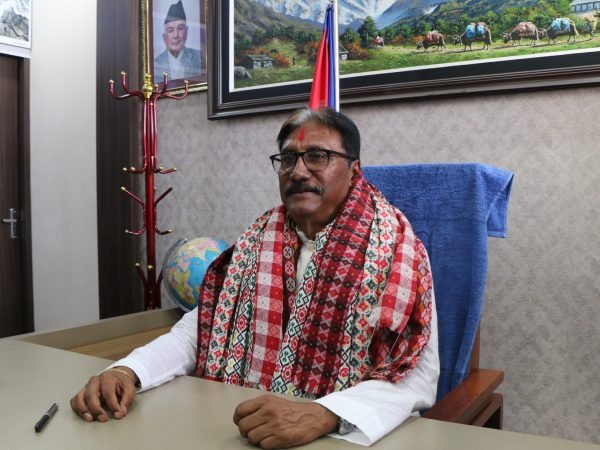
Sharat Singh Bhandari (शरतसिंह भण्डारी) is a distinguished Nepali political leader who has played a vital role in the governance and political transformation of Nepal for over five decades. Recently, he served as the Minister for Labour, Employment, and Social Security, representing Mahottari-2 under the banner of the Loktantrik Samajwadi Party. Born on October 8, 1954, Bhandari brings with him a vast reservoir of experience, political insight, and mature statesmanship, qualities that have earned him the admiration and trust of citizens, colleagues, and observers alike. At the age of 70, he continues to actively contribute to national policy-making with the same energy and determination that has defined his long political journey.
Throughout his extensive political career, Sharat Singh Bhandari has been a rare figure in Nepali politics who has maintained relevance and respect across different eras and political systems. From the Panchayat regime to the constitutional monarchy, and later into the democratic and republican eras, Bhandari has been a constant and dependable presence in Nepal’s political landscape. His political path has been characterized by resilience, reform-mindedness, and a deep commitment to democratic values and inclusive development. His work reflects a leadership style grounded in listening to the people, acting in the national interest, and fostering consensus even during turbulent political times.
Sharat Singh Bhandari is widely regarded not just as a politician, but as a statesman whose contributions go beyond party lines. His leadership philosophy centers around putting the nation and its people above all else. He has advocated for strong public institutions, transparent governance, and policies that bridge the gap between marginalized communities and the mainstream of development. His legislative focus and ministerial efforts have consistently emphasized employment generation, health care access, youth development, infrastructure improvement, and support for the working class—particularly Nepali migrant workers.
His political journey is filled with milestones that reflect his adaptability and dedication to public service. He started his ministerial career as Deputy Minister in the Panchayat and Ministry of Local Development in 1986 A.D. (2043 B.S.), marking his early involvement in administrative and grassroots development. That same year, he was also appointed State Minister for the Ministry of Commerce, showing the confidence of the leadership in his ability to manage key economic portfolios. His continued service in the Ministry of Commerce in August 1989 and March 1990 further reflects his growing influence and competence in economic policy matters during Nepal’s transitional political phases.
From 1995 to 1997, he served three consecutive times as State Minister without portfolio, a role that may not have been attached to a specific ministry but was a testament to his importance within the executive branch. During these years, his advisory role to the government remained crucial. In October 1997, he took on one of his most impactful assignments—as Minister of Youth, Sports, and Culture—a portfolio he held multiple times until 1999. Under his leadership, significant reforms and programs were introduced to promote youth participation in national development, encourage sports at both national and international levels, and preserve and promote Nepal’s rich cultural heritage.
In March 2000, Bhandari assumed responsibility as Minister of Health, a role he reprised in August and November 2001. During this critical period, he played a vital role in expanding public health services to rural areas, ensuring greater access to primary care, and initiating essential health reforms. His contributions helped strengthen Nepal’s public health infrastructure at a time when the sector faced numerous challenges, including resource shortages and political instability.
In 2008, during the early years of Nepal’s republican transition, Bhandari took charge of the Ministry of Culture, Tourism, and Civil Aviation, where he was involved in revitalizing tourism and positioning Nepal as a global destination for culture, spirituality, and adventure. His subsequent tenure as Minister of Defense in 2011 further displayed his capability to handle critical and sensitive portfolios with diplomacy, authority, and strategic vision.
In 2021, Bhandari was appointed as Minister of Energy, Irrigation, and Water Resources, contributing to policy advancements in Nepal’s hydroelectric potential and rural irrigation systems—both crucial for national development. In 2023, he took over the Ministry of Labour, Employment, and Social Security, where he continues to serve as of today. His current work focuses on reforming labor laws, promoting dignified employment, expanding opportunities for foreign employment, and strengthening Nepal’s social security system to cover more citizens, including those working in informal sectors.
Over the years, Sharat Singh Bhandari has built a reputation as a principled leader with deep roots in the Madhesh region and strong national influence. His repeated election from Mahottari-2 is a clear reflection of the public’s faith in his leadership. His long-standing service across diverse ministries shows not only his political endurance but also his ability to adapt to changing contexts and deliver results under varied circumstances.
In conclusion, Sharat Singh Bhandari’s legacy is one of deep public service, visionary policymaking, and political integrity. His career is a model for aspiring politicians and a reminder of the impact that long-term, people-centered leadership can have on a nation’s development. Whether it is in health, commerce, youth, energy, or labor—he has left a meaningful imprint on every ministry he has led. As he continues to serve the nation with vigor, his work remains vital to the realization of a more just, prosperous, and inclusive Nepal.